


Imagine visiting a clinic where a computer helps identify an eye condition before symptoms become serious. Or attending a class where a digital learning tool explains a difficult concept in a simpler way.
These are examples of how artificial intelligence is beginning to influence healthcare and education in India. And the most interesting part? Some of these changes are already happening.
When AI Becomes a Doctor's Helping Hand
One of the most promising applications of AI in healthcare is helping medical professionals identify potential health problems earlier.
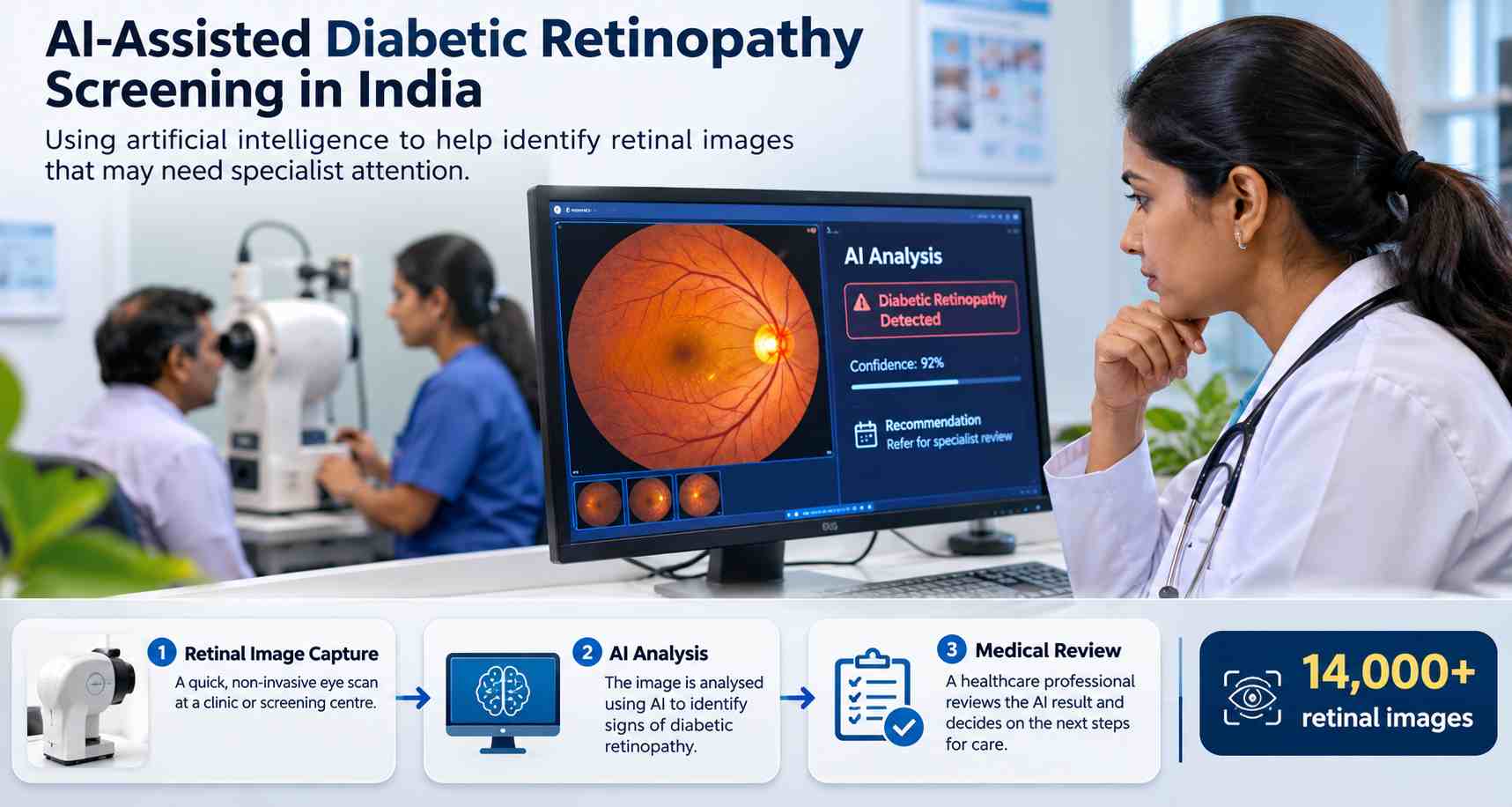
Take diabetic retinopathy, an eye condition associated with diabetes that can damage vision. India's MadhuNetrAI initiative uses AI to examine retinal images and help health workers identify patients who may need specialist attention.
According to the Ministry of Health and Family Welfare's December 2025 update, the technology had assisted with screening more than 14,000 retinal images across 38 healthcare facilities in 11 states.
Another interesting example is the use of AI to analyse cough recordings and chest X-rays for tuberculosis screening. These tools help identify people who may require further medical testing.
Read the government's report on AI-assisted healthcare screening.
AI in Indian Healthcare: A Few Real Examples
| Application | How AI Can Help |
|---|---|
| Eye screening | Identifies retinal images needing specialist review. |
| TB screening | Analyses cough sounds and chest X-rays to flag possible cases. |
| Telemedicine | Supports clinicians with structured information and diagnostic suggestions. |
| Hospital administration | Can assist with scheduling, records and routine workflows. |
These examples explain why AI in healthcare India is attracting attention. Healthcare AI development companies are exploring tools that can support medical teams, while AI-powered clinic and hospital software can help simplify administrative work.
But AI is not a substitute for medical judgement. A screening result still needs appropriate clinical evaluation.
Meanwhile, Something Interesting Is Happening in Classrooms
Artificial intelligence is not just changing how students learn. It is also becoming something students are expected to understand.
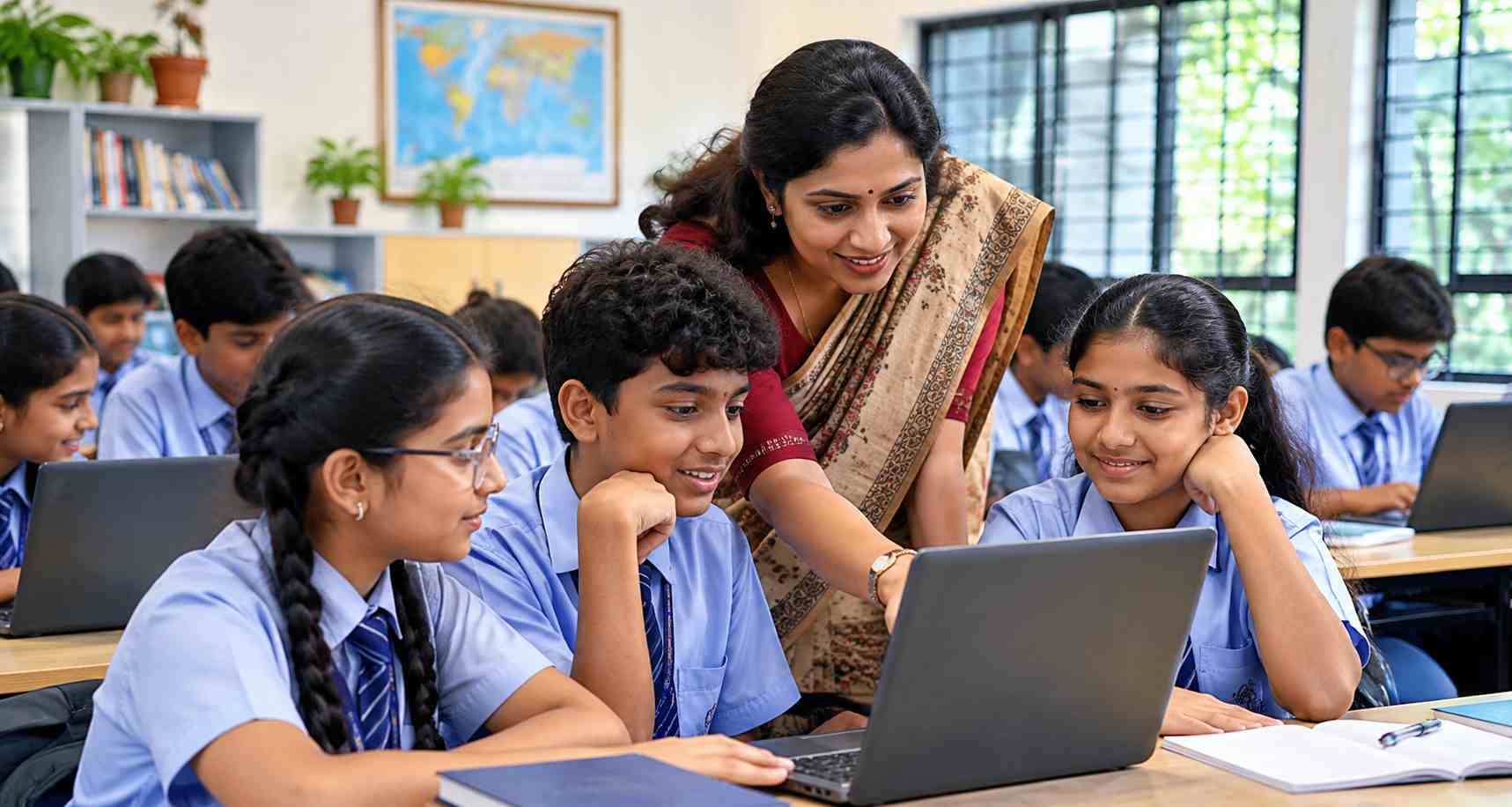
In 2026, CBSE introduced a Computational Thinking and Artificial Intelligence curriculum for Classes 3 to 8, starting from the 2026–27 academic year.
The aim is not simply to teach children how to use chatbots. Students are introduced to logical thinking, recognising patterns, solving problems and understanding responsible technology use.
Explore the Ministry of Education's August 2026 update.
Could Every Student Have a Personal Learning Assistant?
Imagine a student struggling with fractions. Instead of repeating the same explanation, an AI-assisted learning tool could offer another example, generate practice questions and adjust the difficulty based on the student's responses.
That is one potential benefit of artificial intelligence in education: learning experiences that respond to individual needs.
AI-powered educational software solutions can potentially help with:
- Personalised practice: Questions adapted to a student's progress.
- Language support: Explaining concepts in familiar languages.
- Teacher assistance: Preparing lesson materials and exercises.
- Learning feedback: Identifying topics that need more attention.
For AI in education India, accessibility is especially important. Tools that work across languages, devices and different learning environments could help more students benefit from digital education.
However, a helpful AI explanation is not always a correct one. Teachers still play an essential role in checking information and supporting students.
The Big Question: Can We Trust AI With Important Decisions?
Healthcare and education have something important in common: decisions can directly affect people's lives.
An incorrect medical suggestion could delay treatment. A misleading AI-generated explanation could confuse a student. Privacy, bias and unequal access are also important concerns.
In its June 2026 discussion paper, the World Health Organization emphasised the importance of human verification and oversight when AI supports health-related decisions. Read the WHO discussion.
The goal should be to make professionals more effective, not remove human responsibility.
What's Next for India?
From AI-assisted medical screening to computational thinking in schools, India is already experimenting with practical applications of intelligent technology.
The next challenge is making these tools reliable, affordable and accessible—not just impressive.
The future of AI in hospitals and classrooms may be less about machines taking over and more about people doing their jobs better with the right technology.
Looking to build smarter healthcare, education or business applications? Connect with Accolade Tech Solutions to discuss AI application development, intelligent automation and customized software requirements.
Contact: 9900448554 | Website: accoladetechsolutions.com